Best practices for YouTube music in 2026: AI automation
Best practices for YouTube music in 2026: AI automation
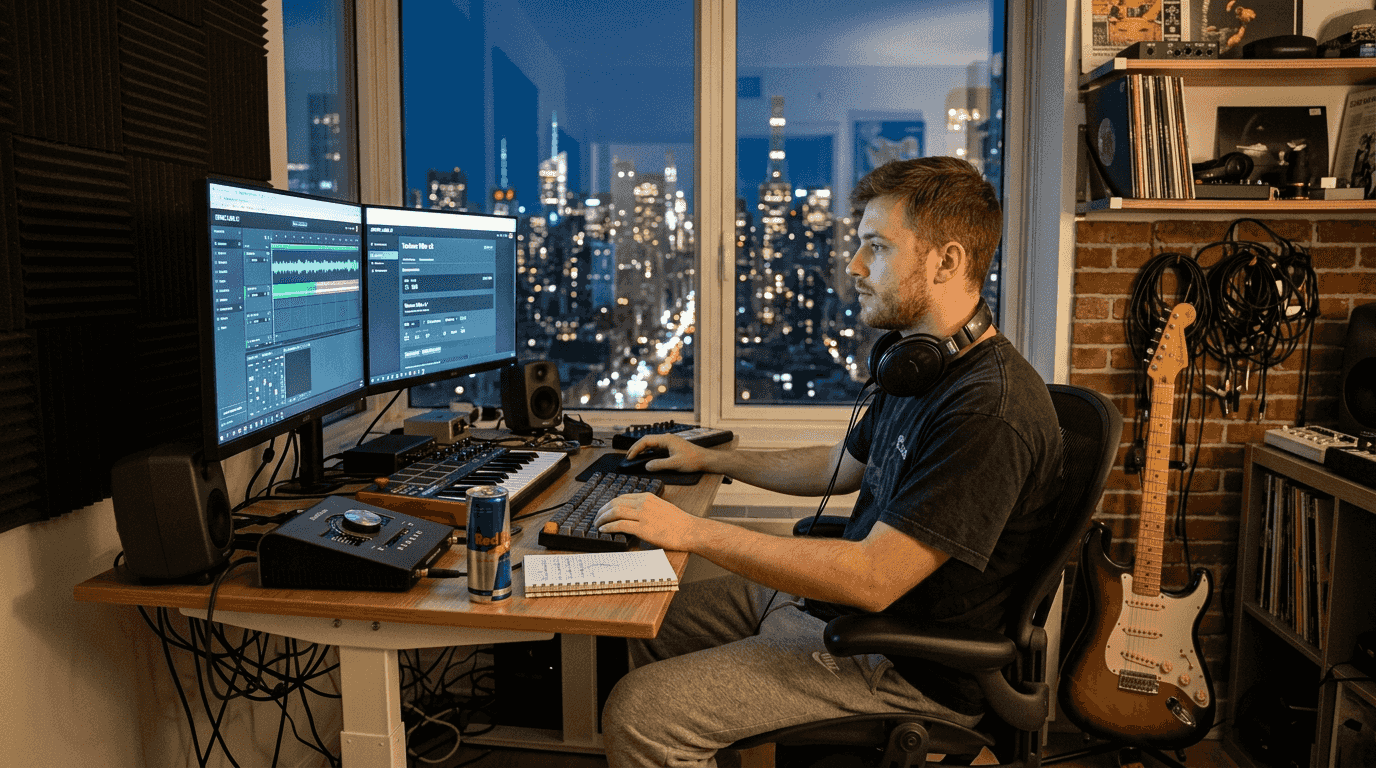
Independent music creators face a critical challenge in 2026: producing consistent, high-quality YouTube content while maximizing monetization. Selecting the right AI tools and profitable niches determines whether your channel thrives or stagnishes. AI automation now handles everything from music production to SEO optimization, reducing workload by up to 80% while increasing upload frequency dramatically. This guide reveals proven strategies for tool selection, niche targeting, SEO mastery, scheduling optimization, and balancing automation with authentic creativity to build a sustainable, revenue-generating YouTube music channel.
Table of Contents
- How To Choose The Right AI Tools And Niches For Your YouTube Music Channel
- Automating Music Production And Visuals With AI
- Optimizing YouTube Music Videos For SEO And Discoverability
- Scheduling And Publishing Automation For Maximum Reach And Revenue
- Balancing AI Automation With Creative Authenticity
- Comparing Top AI Music Platforms For YouTube Creators
- Summary Comparison And Situational Recommendations
- Boost Your YouTube Music Channel With Synthaudio.io
Automate Your YouTube Empire
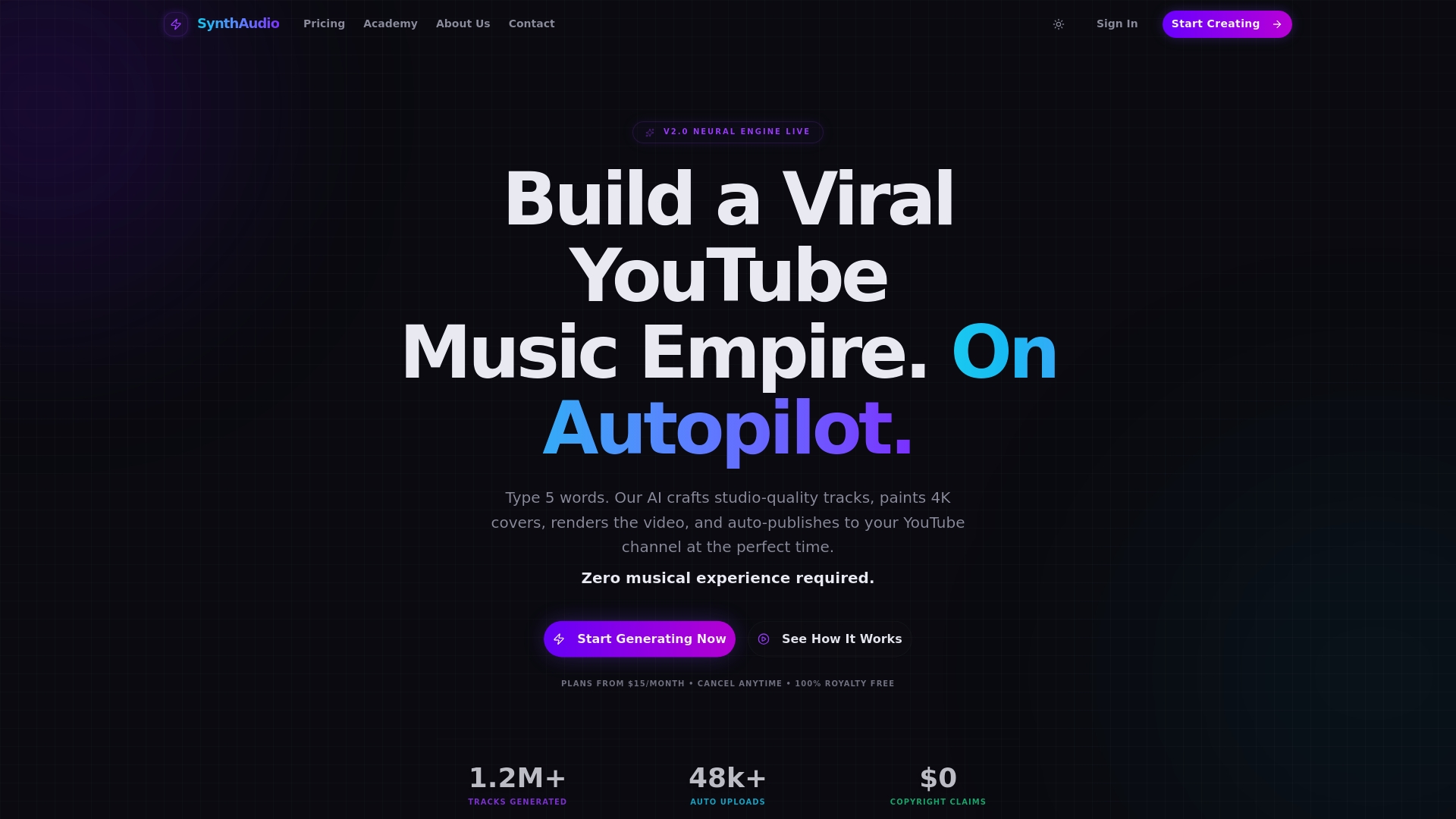
SynthAudio generates studio-quality AI music, paints 4K visualizers, and automatically publishes to your channel while you sleep.
Key takeaways
How to choose the right AI tools and niches for your YouTube music channel
Your platform and niche choices create the foundation for every aspect of channel growth. Revenue per thousand views (RPM) varies wildly across music genres. Lo-Fi and Chillhop average $4-8 RPM, while ambient sleep music and Gym Workout EDM reach $6-12 RPM due to longer watch times and premium advertiser demand. Generic music playlists struggle at $1-3 RPM because they lack targeting.
Evaluate AI platforms based on these critical factors:
- Pricing structure: subscription models suit high-volume creators, while per-track pricing works for occasional uploaders
- Automation depth: look for platforms handling audio generation, visual creation, metadata writing, and scheduling in one workflow
- Scalability features: bulk generation tools and templates enable 20-30 videos monthly without burnout
- Niche-specific capabilities: verify support for your chosen genre's typical video formats and ideal lengths (20-60 minutes for ambient, 2-4 hours for sleep music)
Niche selection requires analyzing competition density and audience demand. Gym Workout EDM attracts fitness enthusiasts seeking energizing playlists, while ambient nature sounds serve meditation and sleep audiences with minimal competition. Research trending keywords in your target niche using YouTube's autocomplete and verify monthly search volumes exceed 10,000 for sustainable growth.
Video length directly impacts watch time metrics. Longer videos (1-3 hours) dominate sleep and study niches because viewers consume entire sessions, signaling strong retention to YouTube's algorithm. Shorter formats (20-45 minutes) excel in workout and focus music categories where users want targeted playlists. Match your AI tool's output capabilities to these niche requirements.
Pro Tip: Test 3-5 videos in your chosen niche before committing to bulk production. Analyze which track styles, thumbnail designs, and video lengths generate the highest retention rates, then optimize your AI templates accordingly.
Automating music production and visuals with AI
AI handles the most time-intensive production tasks, freeing you to focus on strategy and growth. Modern platforms generate studio-quality audio tracks in minutes, eliminating the need for expensive equipment or musical training. Voice cloning technology legally replicates artist vocals to create new content variations, which reduces the need for new recordings and increases channel content diversity.
Audio production automation delivers these workflow benefits:
- Generate complete tracks with customizable tempo, key, and instrumentation in under 5 minutes
- Apply AI voice cloning to add vocal layers without hiring singers or recording sessions
- Use stem splitting to isolate and remix individual instruments from existing tracks, creating fresh variations
- Batch-process 10-20 tracks simultaneously using templates tailored to your niche specifications
Visual assets significantly impact click-through rates. AI-generated 4K album covers and video backgrounds transform plain audio into engaging content. Platforms create custom artwork matching your niche aesthetic, whether minimalist Lo-Fi illustrations or dynamic EDM graphics. Consistent visual branding across your channel builds recognition and professionalism.

Metadata generation represents AI's most underrated advantage. Platforms analyze your audio and automatically write SEO-optimized titles incorporating high-traffic keywords, craft compelling descriptions with timestamps and mood tags, and suggest 20-30 relevant tags balancing broad and niche terms. This eliminates hours of manual keyword research while ensuring every upload targets discoverable search terms.
Pro Tip: Experiment with voice cloning to add originality without extra recordings. Clone trending artist styles legally, then blend multiple vocal profiles to create signature sounds unique to your channel, differentiating your content in crowded niches.
Optimizing YouTube music videos for SEO and discoverability
SEO determines whether your content reaches audiences organically or disappears in search results. Videos with comprehensive metadata rank 50% higher than those with minimal optimization because YouTube's algorithm rewards detailed, relevant information. AI SEO tools increase organic search traffic by 25-40% by systematically targeting high-value keywords.
Keyword strategy forms the core of music video SEO. Target three keyword tiers: primary genre terms (Lo-Fi hip hop, deep house), mood descriptors (relaxing, energetic, focus), and use case phrases (study music, workout playlist, sleep sounds). Balance search volume with competition by mixing popular broad terms with specific long-tail variations like "rainy day Lo-Fi beats for studying."
Title optimization requires precision within YouTube's 100-character limit. Front-load your primary keyword, include a mood descriptor, and specify video length or session type. "Deep Focus Music: 3 Hours Lo-Fi Beats for Studying and Concentration" outperforms generic titles like "Chill Beats Playlist" because it promises specific value and duration.
Description best practices:
- Write 200-300 words incorporating primary and secondary keywords naturally
- Add timestamps every 10-15 minutes for longer videos, improving user experience and watch time
- Include 3-5 contextual sentences explaining the music's mood, ideal use cases, and production style
- Link to related videos and playlists to increase session watch time across your channel
Tag strategy balances broad reach with niche targeting. Use 15-20 tags mixing high-volume genre terms, specific mood keywords, and long-tail phrases. Include misspellings of common terms ("lo fi" vs "lofi") and synonyms ("chill," "relaxing," "calm") to capture varied search queries. Consistency in tag themes across videos signals channel authority to YouTube's algorithm.
Regularly audit your top-performing videos' keywords using YouTube Analytics. Identify which search terms drive the most impressions and clicks, then incorporate those winning phrases into future uploads. This data-driven approach compounds SEO effectiveness over time.
Scheduling and publishing automation for maximum reach and revenue
Timing your uploads strategically amplifies views without additional promotion. Scheduling during peak viewer hours improves average view counts by 15-20% because more potential viewers browse YouTube when your video goes live. Automated scheduling with AI tools yields 20-30% more views and revenue by maintaining consistent presence during high-traffic windows.
Optimal posting times vary by audience geography and niche. Evening hours (6-10 PM) and weekend afternoons capture the largest viewer pools across time zones. Study and focus music performs best Monday through Thursday evenings when students and professionals seek concentration aids. Workout playlists peak early mornings (5-8 AM) and after-work hours (5-7 PM) when fitness routines occur.
Upload frequency directly impacts channel growth velocity:
- Daily uploads (25-30 monthly) dominate high-retention niches through algorithm favorability and playlist ubiquity
- Three uploads weekly (12-15 monthly) balance quality and consistency for creators with limited automation
- Weekly uploads minimum maintain audience expectations but limit growth potential in competitive categories
Time zone optimization matters for international audiences. Schedule uploads for 8-10 PM in your primary viewer region, typically North America or Europe for English-language channels. AI scheduling tools automatically calculate ideal posting times across multiple zones, maximizing initial engagement that signals quality to YouTube's recommendation system.
Insight"Scheduling uploads during peak hours significantly boosts channel growth by capitalizing on when audiences actively seek new content, creating momentum that algorithms amplify throughout the following 48 hours."
Consistency trains audience expectations. Viewers who discover reliable upload schedules return regularly, improving subscriber loyalty and notification click rates. Set a sustainable publishing cadence using automation, then maintain it for at least 90 days to establish algorithmic trust and viewer habits.
Balancing AI automation with creative authenticity
Full automation risks producing generic content that fails to build lasting audience connections. Seventy percent of top-performing channels blend AI efficiency with manual creative input to maintain distinctive personalities. Your unique voice, visual style, and curation choices differentiate your channel from competitors using identical AI tools.
Authenticity manifests through these creative decisions:
- Custom thumbnail designs featuring consistent color palettes, typography, and brand elements
- Handpicked track sequencing in playlists that creates intentional mood progressions
- Original channel art, about sections, and community posts establishing creator personality
- Selective manual edits adding personal flourishes to AI-generated tracks or visuals
Audience fatigue emerges when channels rely exclusively on unmodified AI outputs. Viewers sense homogenization across similar channels and disengage. Combat this by developing signature elements: a unique visual filter applied to all videos, a specific BPM range defining your sound, or recurring themes in thumbnail art that become instantly recognizable.
Regularly review audience feedback through comments, likes, and analytics. Notice which videos generate the most enthusiastic responses and analyze what creative choices made them special. Double down on those elements while letting AI handle technical execution. This feedback loop ensures your automation serves your artistic vision rather than replacing it.
Pro Tip: Schedule dedicated creative review sessions amid automated workflows. Spend 2-3 hours weekly curating your best AI outputs, adjusting visual templates, and planning themed content series. This small time investment prevents creative stagnation while preserving automation's efficiency gains.
Maintain creative control through flexible pricing tiers that let you adjust automation levels as your channel evolves. Start with heavy automation during initial growth phases, then gradually incorporate more manual creativity as revenue justifies additional time investment.
Comparing top AI music platforms for YouTube creators
Platform selection determines your production capabilities, costs, and scaling potential. Subscription models suit creators targeting 15+ monthly uploads by offering unlimited generation at fixed costs. Per-track pricing benefits occasional uploaders or those testing niches before committing to high-volume production.
Feature depth separates platforms beyond pricing. Voice cloning and stem splitting expand creative possibilities by enabling vocal variations and remixes without new recordings. Integrated scheduling eliminates manual upload management, critical for maintaining consistent presence across time zones. SEO automation ensures every video targets discoverable keywords without hours of research.
Niche-specific capabilities matter significantly. Verify your chosen platform supports your target genre's typical video lengths. Ambient and sleep music require 1-3 hour outputs, while workout playlists need 30-60 minute formats. Some platforms limit generation lengths, forcing workarounds that add production time.
Scalability features determine growth ceilings. Bulk generation tools and saved templates let you produce 10-20 videos in a single session by reusing proven formulas with variations. Channels targeting aggressive growth (25-30 monthly uploads) need unlimited generation without per-track charges or monthly caps.
Support and learning resources accelerate your mastery curve. Platforms offering tutorial libraries, niche-specific guides, and responsive customer service reduce trial-and-error time. Check whether the platform provides active communities where creators share strategies and templates.
Summary comparison and situational recommendations
Match your platform choice to your channel goals and resource constraints. Rapid scalers prioritizing market dominance need unlimited automation and bulk tools. Budget-conscious creators testing viability should minimize upfront investment. SEO-focused channels require robust metadata optimization and keyword tools.
Tradeoffs exist between automation depth and creative flexibility. Heavy automation maximizes output but requires accepting AI aesthetic choices. Lighter automation preserves control but limits scaling potential. Most successful creators start with high automation during channel launch, then selectively add manual creativity as revenue grows.
Niche-focused creators targeting high RPM categories (ambient, Lo-Fi, Gym EDM) benefit most from unlimited generation platforms because consistent uploads compound algorithmic favorability. Occasional uploaders or those managing multiple projects alongside YouTube should prioritize per-track pricing to avoid paying for unused capacity.
Review your analytics quarterly to validate your platform choice. If you consistently max out generation limits or spend excessive time on manual tasks your platform could automate, upgrade to more comprehensive tools. If you undershoot your subscription's capacity, downgrade to economical pricing tiers.
Boost your YouTube music channel with Synthaudio.io
Ready to implement these best practices and scale your YouTube music channel efficiently? Synthaudio.io integrates every element covered in this guide into one streamlined platform. Generate studio-quality tracks, create 4K visuals, optimize SEO metadata, and schedule uploads automatically. Our subscription plans fit creators targeting 15-30 monthly uploads with unlimited generation capacity.
New to AI music automation? Our Creator Academy provides step-by-step tutorials covering niche selection, SEO optimization, scheduling strategies, and creative balancing techniques. Learn proven workflows from successful channels already generating consistent revenue through AI-powered content.
Synthaudio.io eliminates the technical barriers preventing creators from dominating profitable music niches. Focus your time on strategy and growth while our platform handles production execution. Try Synthaudio.io today and transform your YouTube music channel in 2026.
Frequently asked questions
How do I pick the best AI platform for my YouTube music niche?
Consider your target upload frequency, available budget, desired automation level, and niche-specific requirements like video length. Platforms vary significantly in pricing models, feature sets, and SEO integration depth. Most services offer trial periods or demos, letting you evaluate workflow fit before committing to subscriptions.
Can AI-generated music fully replace manual creativity on YouTube?
AI efficiently handles repetitive production tasks but lacks the personal artistic touch that builds authentic audience connections. Top-performing channels blend AI outputs with unique creative edits, original visual branding, and thoughtful curation. Balancing both approaches yields better long-term engagement and channel sustainability than pure automation.
What are the best times to schedule YouTube music video uploads?
Evening hours and weekends see highest engagement across most music niches, with 6-10 PM local time capturing peak viewer activity. Consistent timing helps build audience habits around your upload schedule. AI scheduling tools automatically calculate optimal posting windows across multiple time zones, maximizing initial views that signal quality to recommendation algorithms.
How many videos should I upload monthly for channel growth?
Channels posting 20-30 videos monthly dominate high-retention niches through algorithmic favorability and playlist ubiquity. Minimum viable frequency sits at 8-12 monthly uploads to maintain audience expectations and search visibility. Start with sustainable output using automation, then increase frequency as revenue justifies expanded production capacity.
Recommended
Written by
Growth AI
Marketing Expert
As an expert on the SynthAudio platform, Growth AI specializes in AI music production workflows, YouTube algorithm optimization, and helping creators build profitable faceless channels at scale.